
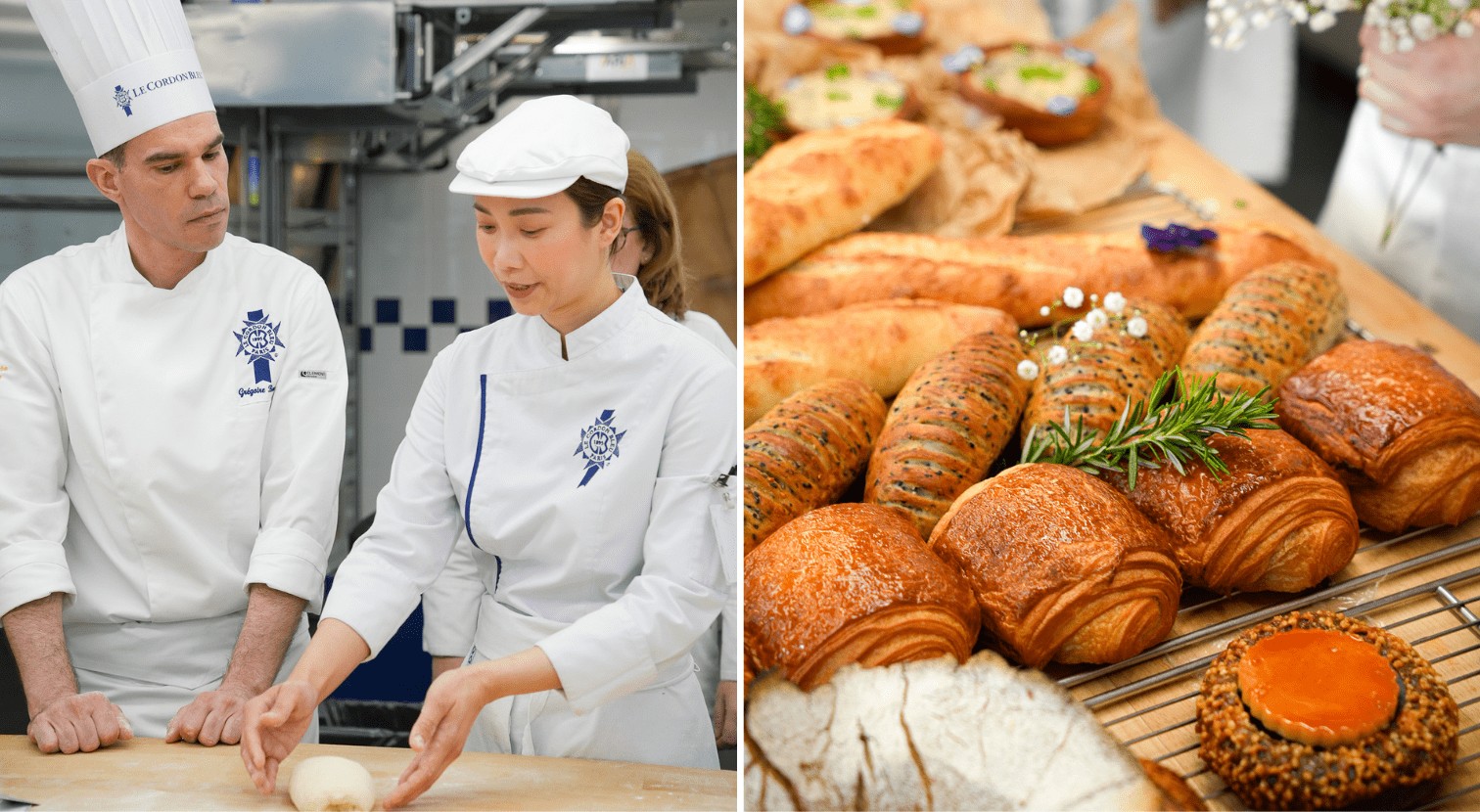
Mastering the art of bread-making while innovating in culinary creation: This is what the catering baker profession has to offer. Much more than just making bread or freshly baked pastries, this professional is an all-round craftsperson, capable of combining discipline, creativity and a sense of service. From local shops to catering laboratories and events, they play a key role on the local gastronomy scene.
The daily routine of a catering baker involves a wide variety of tasks which are complementary. The main task is, of course, the artisanal production of bread and freshly baked pastries. Kneading, shaping, baking... These techniques require precision and consistency. They master different types of flour, yeast, and fermentation times, to offer a variety of quality products.
But it doesn't stop there. They also develop a range of savoury and sweet catering products: Quiches, pizzas, salads, sandwiches, individual or shared desserts. This range caters to customers looking for quick and tasty meals made on-site.
Catering bakers are also responsible for preparing specific orders: Meal trays, buffets, private or professional events. They adapt their production according to customer flow and peaks in activity, which requires great organisational skills.
At the same time, they are a culinary creator, inventing new recipes to surprise and gain the loyalty of their customers. This creative element is particularly important for personalised events such as weddings and cocktail parties.Working in the bakery and catering industry requires great physical and mental stamina. The pace is fast, days often start very early, sometimes as early as 3 or 4 in the morning. This is essential for the first products to be ready when the shop or salespoint opens.
The working environment can be hot, noisy and demanding. You have to stand for several hours, carry heavy loads and meet tight deadlines. Teamwork is common, but some tasks may be carried out completely independently.
This profession also demands great discipline: Every gesture counts, and consistency is essential to guarantee constant product quality. Despite the constraints, many professionals emphasise the pride they take in their work and the pleasure of seeing their creations appreciated by customers.Catering bakers need a range of highly technical skills. In boulangerie, they master the fundamentals of planning, preparing freshly baked pastries and working with dough. As a caterer, they are familiar with classic savoury recipes such as quiches and takeaway dishes, as well as more complex techniques depending on the requirements of their customers.
They must also comply with food hygiene standards, know storage and cooking temperature regulations, and make good use of professional equipment such as ovens, kneading machines and refrigeration chambers etc.
Planning production is also part of their daily routine. They need to know how to organise their work to meet deadlines and anticipate requirements.Beyond technical skills, certain personal qualities make all the difference. Creativity, of course, is a major asset if you want to stand out from the crowd and offer something new and original. A sense of taste is fundamental for balancing flavours, harmonising textures and tantalising the taste buds.
You also need to be physically strong: The working hours, pace and intensive manual labour require you to be in good shape. Precision and speed of execution are important to maintain consistent quality, even during busy times.
Finally, a sense of customer service, team spirit and the ability to learn continuously enable you to adapt in a profession that is constantly evolving.In France, the profession of catering baker is accessible from the end of year 10 via a CAP Boulanger, a two-year training programme that teaches the foundations of the trade. It is then possible to continue studying with a complementary catering qualification, or to take a more advanced specialisation depending on your career plan.
Renowned institutes such as Le Cordon Bleu provide programmes that combine tradition and modern techniques with modules in management and culinary innovation. Adults looking for a new career could also consider continuing education or work-study, which are often shorter but very hands-on.
This wide range of training programmes enables rapid entry into the profession, with a good level of employability.An entry-level catering baker earns between €1,500 and €1,800 gross per month. Income rises with experience, particularly if you become a production manager or start your own business.
Launching or taking over a bakery and catering business is a common option, offering greater freedom and financial potential. Some also choose to specialise in events, work in upmarket catering or become an instructor or consultant.
There are plenty of opportunities in this rapidly expanding profession, particularly with the rise of artisanal gastronomy and personalised services.Potential employers are varied: Artisan bakeries, specialist chains, gourmet caterers or supermarkets with laboratories. Some work in hotels, restaurants or tourist sites. Others set up their own business, sometimes a food truck or specialist shop.
The demand for healthy and gourmet products made on-site is constantly growing. More and more customers are looking for a local caterer capable of offering made-to-measure services, which makes the profession increasingly attractive and durable.
Are you looking for a job that's manual, creative and in which you are in direct contact with customers? Being a catering baker provides the perfect balance between tradition and modernity. Accessible, rewarding and evolving, it offers great prospects to those who want to get hands on... and demonstrate their passion in what they produce.Copyright © 2026 Le Cordon Bleu International B.V. All Rights Reserved.