
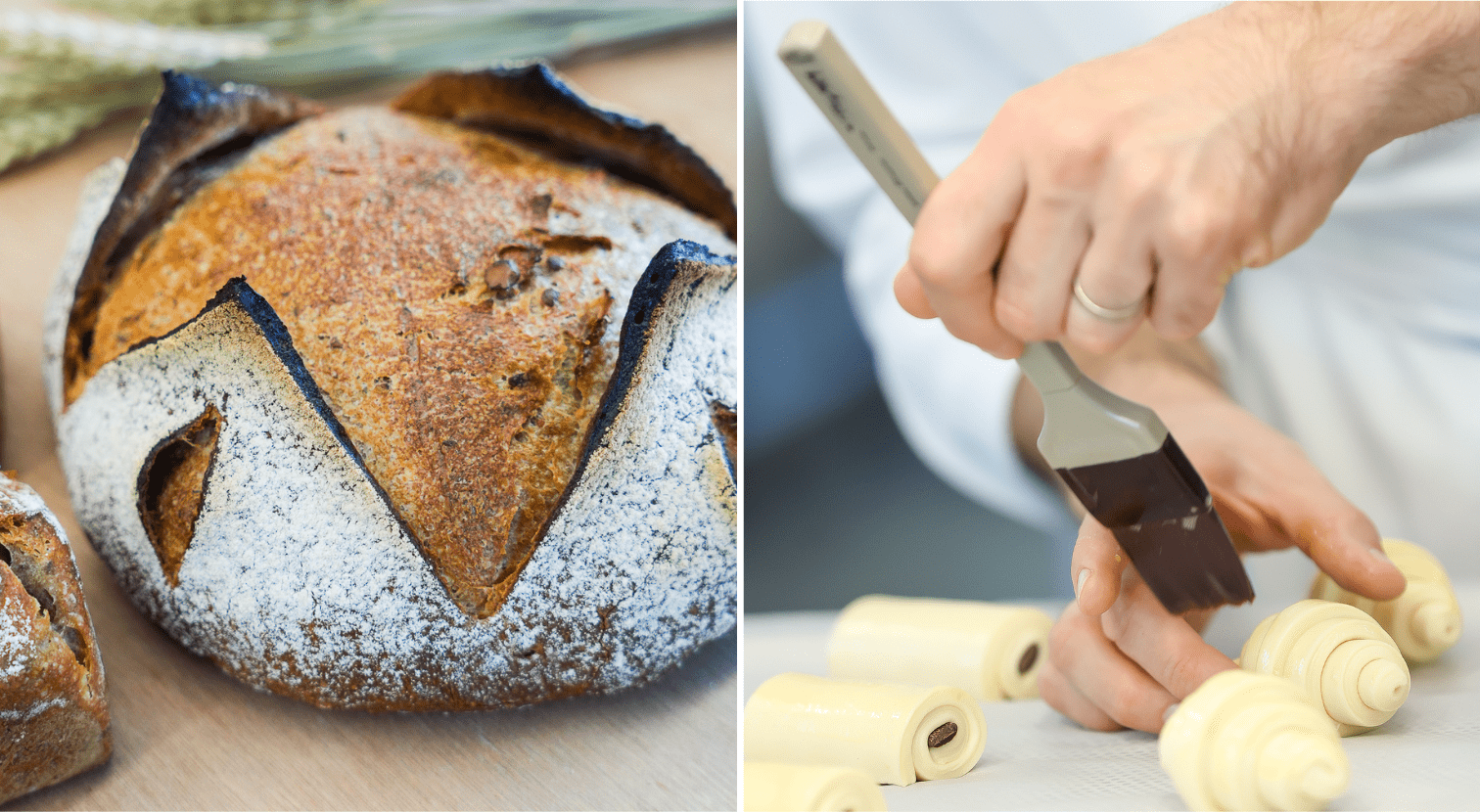
Although the title 'boulangerie-viennoiserie chef’ is not an officially recognised profession, it is commonly used by the public to refer to a boulangerie chef who is also skilled in making freshly baked pastries. That is why we use this term here: It accurately reflects what candidates seeking training in both skills are looking for.
The smell of freshly baked bread, the crispiness of a perfectly golden baguette, the delicacy of a handmade croissant... The profession of boulangerie-viennoiserie chef is an art that is as much about experience as it is about practice. Behind each batch lies precise expertise, meticulous work and unwavering passion. For those who dream of mastering the secrets of artisan boulangerie and transforming simple ingredients into exceptional products, one question stands out: How can you enter this flourishing profession?
Becoming a boulangerie-viennoiserie chef means entering a world where you work as much with your hands as with your senses. Each day begins with a rigorous selection of ingredients: The quality of the flour, the choice of a PDO butter, the freshness of the yeast... Raw materials are a boulangerie chef's true partners and mastering them is key to creating exceptional results.
Next comes the heart of the profession: Mastering the fundamental processes. Kneading brings the dough to life, proving and fermentation determine its structure, shaping requires the artisan's deft touch, and baking becomes a form of alchemy where the oven dictates the rules. This dialogue between the artisan and the dough is also found in freshly baked pastries: Making laminated doughs, respecting resting times, achieving a millimetre-precise flaky texture.
A boulangerie-viennoiserie chef is also creative, inventing new speciality breads, revisiting classic viennoiseries and developing sweet and savoury assortments that appeal to an increasingly curious clientele. This profession also involves customer contact: Welcoming clients, advising them, showcasing products and conveying emotion through each batch baked.The profession of boulangerie-viennoiserie chef can be carried out in a multitude of settings, each offering a unique platform for showcasing talent. In an artisan bakery, the artisan often becomes a local icon: They create their own specialities, forge a strong culinary identity and build a loyal customer base that values quality and authenticity. In luxury hotels and restaurants, the work takes on an even more prestigious dimension: Exceptional breads and impeccable viennoiseries become the hallmarks of breakfasts and tea times, where only outstanding creations find their place. Gourmet restaurants offer a setting where precision meets creativity: The boulangerie-viennoiserie chef works as a chef de partie, producing tailor-made creations that are perfectly in tune with the vision of the head chef. Some choose to become entrepreneurs and open their own establishments, in France or abroad, to fully express their style, assert their identity and offer a unique range of products. Finally, luxury brands and specialised boutiques seek individuals capable of designing high-end, innovative and perfectly executed products for a demanding clientele.
A demanding commitment
Being a boulangerie-viennoiserie chef requires daily discipline: Early mornings, hard physical work, production management and the need to maintain a high standard of excellence. It is a profession where demands are constant and precision is measured down to the last gram.
Unparalleled satisfaction
Although traditional training programmes exist (CAP Boulangerie chef, Professional baccalaureate, etc.), they do not all offer the same level of discipline or international recognition.
The Le Cordon Bleu Paris Boulangerie Diploma stands out thanks to:
The Le Cordon Bleu institute Boulangerie Diploma opens the door to numerous careers in boulangerie, viennoiserie and patisserie. Graduates quickly find positions as boulangerie chefs in artisan bakeries, gourmet restaurants or luxury hotels, where their advanced techniques are particularly sought after. With experience, they can progress to roles such as chef de partie, boulangerie chef or join companies in the sector as a consultant or chef instructor.
Entrepreneurship is also a popular path: Opening your own bakery, launching a creative freshly baked pastries shop, or developing a range of high-end products to sell. Thanks to the institute's international reputation and its powerful alumni network, graduates also benefit from attractive opportunities abroad.Although complementary, the two professions do not rely on the same skills.
A boulangerie chef focuses on bread: Mastering fermentation, working with flour, kneading and baking. A viennoiserie chef, on the other hand, works with yeast doughs and leavened & laminated doughs: Croissants, brioches, pains au chocolat. They excel in making laminated doughs, puff pastry and precise techniques.
Students learn both disciplines to become well-rounded artisans, capable of creating exceptional products.
Remuneration varies according to experience, structure and location:
Copyright © 2026 Le Cordon Bleu International B.V. All Rights Reserved.