
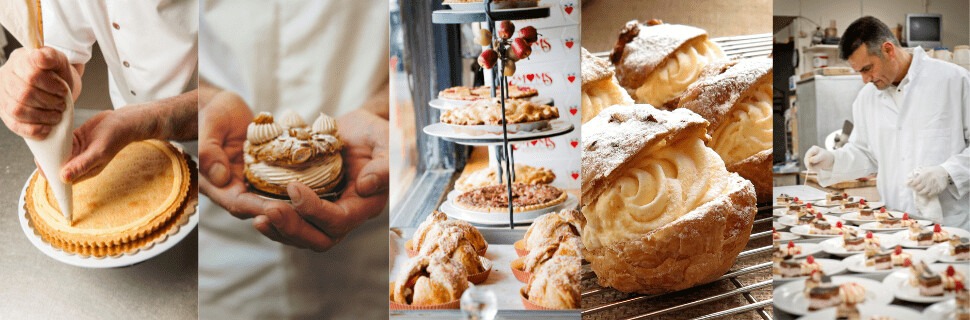
 Great pastry is easy to admire and difficult to execute consistently.
For employers, visual appeal alone is never enough. What matters is whether a patissier can deliver the same standard repeatedly, under time pressure, and within a structured kitchen environment.
Pastry school plays a defining role in developing this capability. Past teaching recipes, it trains students to think, move, and work like professionals. It is where technique is shaped through repetition, correction, and exposure to real production conditions before a graduate enters a commercial kitchen.
This article gives a behind-the-scenes look at pastry schools, explaining what skills employers value most and how structured training builds the capabilities needed for candidates stand out in real-world work environments.
Table of Contents
Creativity is great, but when employers assess candidates, they look for signs of reliability and control. Strong graduates demonstrate habits that translate smoothly into real working kitchens.
Key qualities employers value include:
The ability to reproduce the same pastry with consistent texture, structure, and finish across multiple batches
Neat shaping, precise decoration, and controlled finishes that reflect disciplined training
Understanding how long tasks take and how to sequence production efficiently during service or preparation
Working within established recipes, hygiene protocols, and workplace procedures without improvisation
These qualities are difficult to develop through self-practice alone. They are formed through structured environments where standards are enforced consistently
How Pastry School Builds Professional-Level Skills
Inside a pastry school, learning follows a deliberate rhythm. Techniques are introduced through demonstrations, practised hands-on, corrected by instructors, and repeated until movements and decisions become instinctive.
Students experience firsthand how:
A slight temperature change or mixing inconsistency can alter texture, rise, or finish
Knowing when to prepare, rest, bake, or finish a component determines its success
Clear mise en place and preparation planning reduce mistakes and improve efficiency
This process trains students to recognise problems early and adjust methodically, a skill employers value highly in fast-paced kitchens.
Pastry school teaches students to move from recipe execution to production thinking. Students learn to plan, sequence, and manage multiple pastry components rather than working on one item at a time.
This shift is immediately noticeable to employers in commercial kitchens:
Preparing components in the right order to support smooth production
Applying decoration and presentation with uniformity rather than variation
Measuring accurately and using resources responsibly during production
Maintaining focus and precision when multiple tasks are happening at once
These behaviours signal readiness to operate within skilled pastry teams.
One of the most defining aspects of pastry school is the environment itself. Students train in professional kitchens that mirror real working conditions, not idealised home settings.
This environment teaches:
Following established methods to ensure consistency and control before making informed adjustments
Maintaining standards consistently across all stages of production
Producing multiple items efficiently without sacrificing quality
What happens in the kitchen matters as much as what is taught. Pastry training develops more than technical pastry skills, extending into the broader disciplines that support food-service operations as a whole.
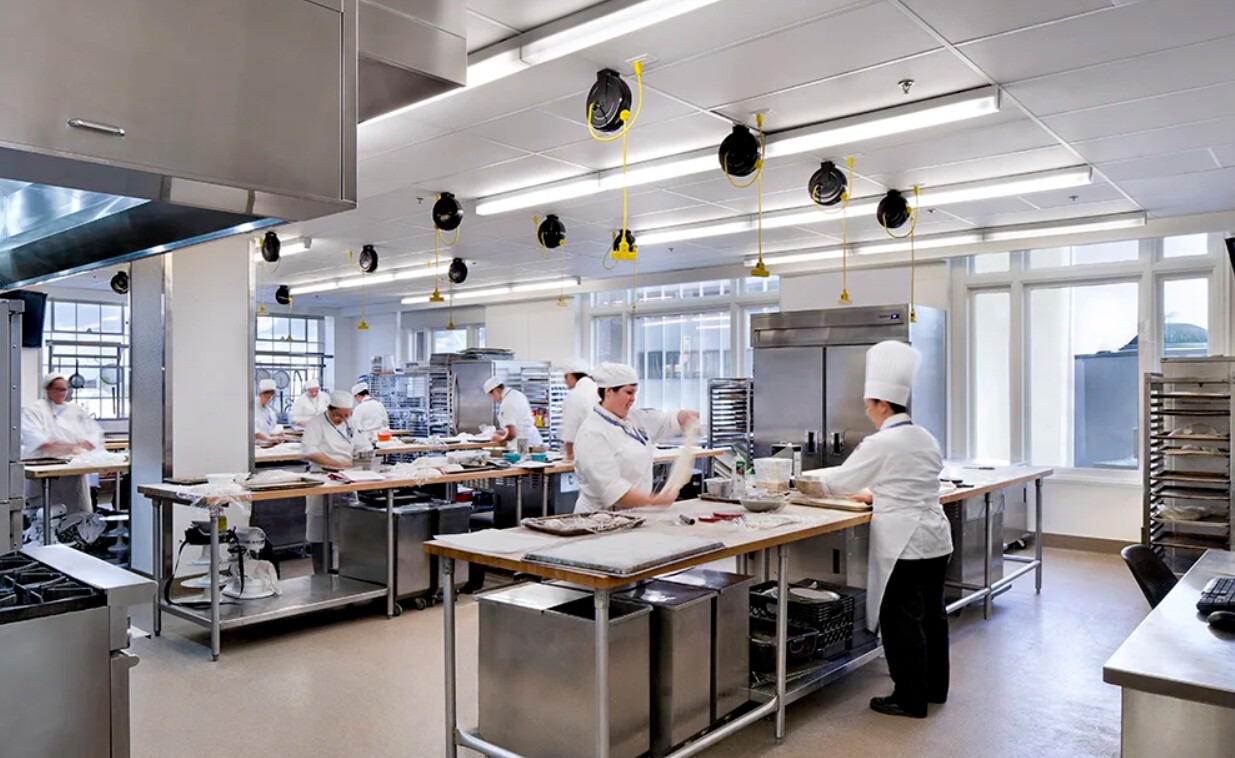
Have a look at the environment where pastry and culinary training happen side by side.
 Seeing the environment in action adds context to how training unfolds day to day. Demonstrations, hands-on practice, and repetition happen within clear routines that support steady skill development and technical control. Over time, students become comfortable working under these conditions.
Why Pastry School Experience Matters to Employers
From an employer’s perspective, pastry school experience reduces hiring risk. It shows that a candidate has already been trained to operate within a commercial kitchen structure, rather than learning basic discipline on the job.
Graduates from established institutions such as Le Cordon Bleu are often recognised for:
Graduates understand dough handling, temperature control, and finishing standards well enough to execute without repeated correction or supervision.
They follow prep lists, hygiene protocols, and production sequences naturally, instead of needing constant reminders about workflow or cleanliness.
Employers see consistency in portioning, texture, and presentation, even when several pastry components are produced at the same time.
Graduates adapt more quickly to a kitchen’s pace and structure, reducing the training time usually required for new hires.
Students train with the mixers, ovens, chocolate tools, and pastry workstations commonly used in commercial kitchens, allowing them to adapt quickly when entering a real workplace.
Copyright © 2026 Le Cordon Bleu International B.V. All Rights Reserved.