
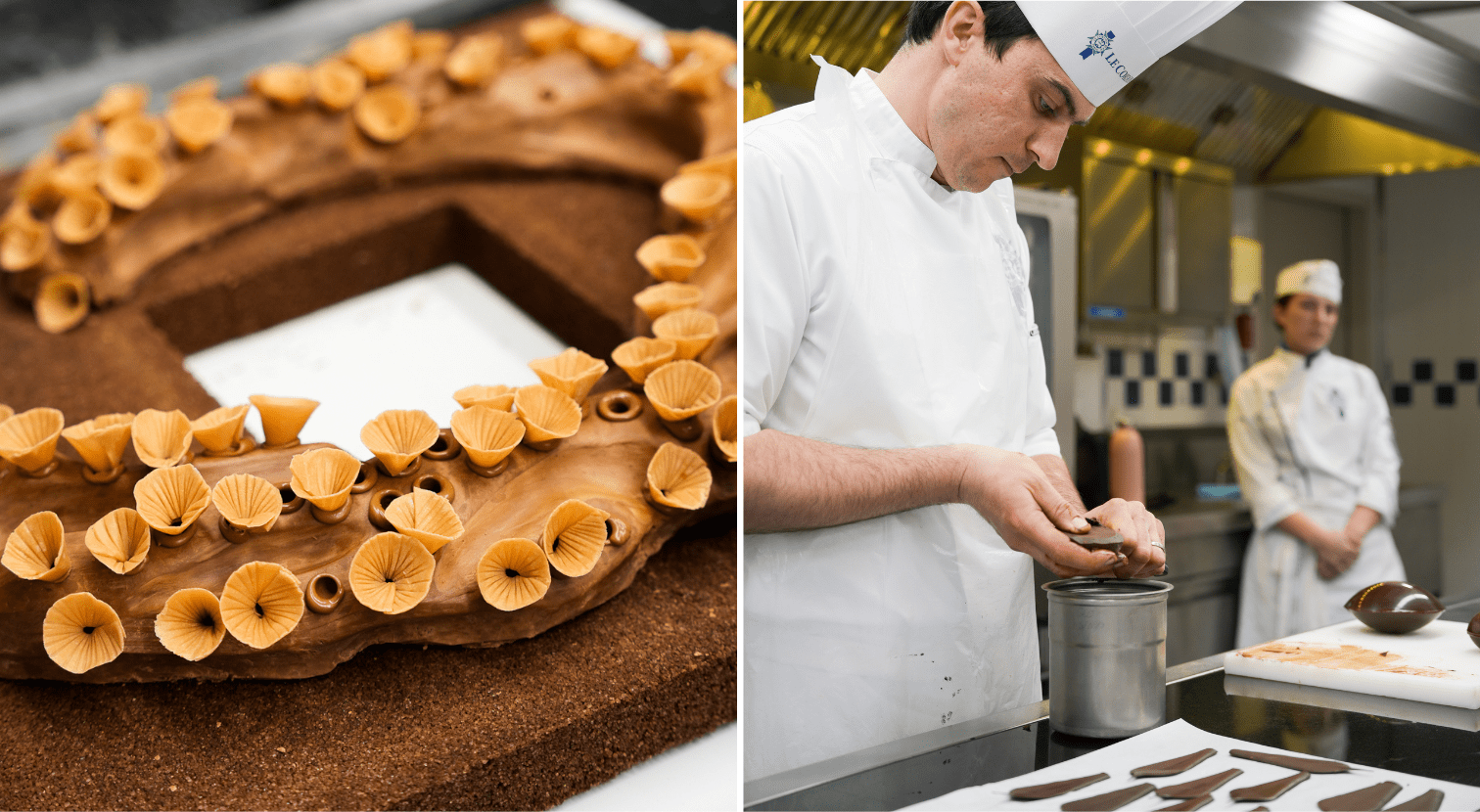
Chocolate appeals to everyone: children, fine gourmets, and lovers of both cuisine and pastry. However, for those who dream of turning it into a profession, the path requires discipline, creativity, and mastery of specific techniques. Becoming a chocolatier means entering the demanding world of cocoa craftsmanship, where every movement counts. Whether you are a pastry chef seeking specialisation, a confectioner wishing to expand your expertise, or an adult undergoing a career change, various training pathways provide access to this increasingly sought-after craft profession. This guide offers all the essential insights to understand the careers linked to chocolate, the skills to acquire, and the professional opportunities available.
A chocolatier is an artisan with meticulous expertise. Their daily work revolves around creating chocolates, bars, ganache, and even sculpted chocolate pieces. They handle chocolate – a living material – by heating, tempering, moulding, flavouring, and refining it. Each recipe is a quest for balance between tradition and innovation.
Their role extends beyond the workshop: they may also manage a boutique, advise clients, and organise sales around major seasonal events such as Christmas or Easter. This profession is simultaneously manual, creative, and entrepreneurial, with the rhythm of production guided by the seasons – and where taste leaves no room for approximation.
Choosing to become a chocolatier represents both a personal and professional commitment. Whether you are searching for more meaning, weary of an uninspiring job, or drawn to the world of craftsmanship, retraining in chocolate-making is achievable.
Adult training centres such as GRETA or specialised schools offer intensive programmes. The Personal Training Account (CPF), Pôle Emploi, or regional funding can often cover part of the cost. Before taking the plunge, it is highly recommended to complete an introductory course to confirm your interest, and to discover whether you are ready to swap your keyboard for a spatula.
This is not a profession to improvise. It requires a love for precision, an eye for beauty, and the ability to handle textures with patience. Working with chocolate demands accuracy, physical endurance, and curiosity, as culinary trends evolve rapidly.
A skilled chocolatier is part artist, part technician, but above all, a passionate individual who does not count their hours when immersed in a creation.
There are many career prospects: working in an artisan chocolate shop, joining an industrial workshop, entering a prestigious house, or opening your own boutique. Some professionals become laboratory managers, others launch their own brand, and some host workshops to share their passion.
What is certain is that the profession allows room for growth and creativity, provided one is willing to keep learning and evolving. Competitions such as the Meilleur Ouvrier de France (MOF) or the World Chocolate Masters can also give a significant boost to a career.
Each professional environment has its own dynamics. Artisan workshops offer independence, direct customer interaction, and creative freedom. Industry focuses on precision, teamwork, and large-scale production. Prestigious houses demand excellence, where every piece must be flawless and every detail executed to perfection.
It is up to each individual to find the setting that best suits their ambitions, rhythm, and aspirations.
Embarking on a career in chocolate-making means choosing a profession that is sensory, stimulating, and rewarding. The first advantage is personal fulfilment: crafting with your hands, working with fine ingredients, and offering pleasure to those who taste your creations. Few careers are as satisfying.
Demand for artisan products continues to grow. Consumers increasingly seek flavour, quality, and authenticity. This opens up exciting opportunities for passionate chocolatiers, especially those launching their own businesses or developing a unique style.
Another benefit is variety. A chocolatier rarely does the same thing twice. Between Christmas collections, Easter creations, bars, chocolates, events, and workshops, boredom is simply not part of the job.
Finally, there is freedom. With an artisan or micro-entrepreneur status, it is possible to start at your own pace, experiment with ideas, and build your reputation through markets or online. It is a wonderful way to combine passion and professional ambition.
A beginner chocolatier earns on average between €1,600 and €1,900 gross per month. With experience, this amount increases, particularly for those who become managers or independent artisans. During festive periods or through themed workshops, some professionals generate attractive additional income. The potential is real but will depend on your commitment, network, and business skills.
The world of chocolate-making does not exist in isolation. Many chocolatiers are also trained in pastry, confectionery, or ice cream making. This versatility is a true asset for building a diverse and creative business, especially if you plan to work independently. And in this field, learning never stops.
Becoming a chocolatier is not just about melting chocolate. It is a life choice. A demanding yet deeply rewarding profession. If you are passionate about precision, creation, and sharing… then take the leap. Chocolate is waiting for you.
Copyright © 2026 Le Cordon Bleu International B.V. All Rights Reserved.